All posts by jmatie22

Snorkeling Tips

The 8th day of Hawaii I spent the day doing snorkeling activities. This is a good read to remember what I learned:

http://travel.johnmatienzo.com/?p=1276

Also, one additional tip is if you want to take pictures underwater, it would have been good to invest in this (this is what Janie did): https://www.amazon.com/Best-Sellers-Cell-Phone-Dry-Bags/zgbs/wireless/17875443011

In terms of snorkeling while you’re on a Kayak, you can easily go on and off without actually tipping the kayak over. For going off, put your snorkeling mask on first properly and tightly (remember to wash your face from the sunscreen), and then quickly “sit” on the edge and slide off. Then put your flippers while you’re in the water. Note, if you want to wear a life jacket, put it on and tighten it before you get into the water. Personally, the mobility is extremely limited with a life jacket, but it does make it easier/less tiring if you’re out for a long time.

Golfing Tips

Went to Makalei Golf Course in Kona, Hawaii (first time on a golf course), and here are some things I learned.

A golf course in general:

  • Need to wear a collared shirt, and wear shorts that is Bermuda length (ie. basically almost to the knees)
  • Buy “range balls” to practice in the on-site driving range. Then sneak some of the balls for use on the course (leave the bucket behind at the range part)
  • You can drink on the course. I recommend a flask of good whisky, and also some seltzers. Also, bring some snacks (maybe chips and/or beef jerky)
  • A raincoat was key for unexpected rain
  • I wore regular bike running shoes. Not sure if that is allowed in all golf courses

About clubs/irons themselves:

  • For my first time on the course, my general rule was to start off with a driver club (with tee) first to hit it as far as I could
  • After the first swing, I would switch to an iron (I used a 9 since apparently it is the one that is a bit more flexible with “mistakes”)
  • When the ball is close or on the green, I would switch to a putter
  • I used a regular club as opposed to a “stiff” one

Posture and swinging the clubs

  • First, I think it’s important for your clubs to be a length that matches your height. I had to hold them lower than usual to compensate for the clubs being long
  • You always want the base of the club to be parallel to the floor, but your arms perpendicular to the floor. This means that you need to use / bend your wrist when holding the club
  • For standing, have your feet probably 2 feet away from each other, and parallel to one another. Then as you stand straight, bend your upper body, but keeping your back straight. After bend your knees slightly like you are snowboarding. Then apply the club holding rules as mentioned in the previous bullet
  • For the swing, you want to always keep your left arm straight until you hit the ball, then it bends
  • For your hands have your left hand hold it keeping your thumb in front of you and parallel to the club. For your right hand, have your pinky go between your left pinky and left ring finger, and have your right thumb go over your left thumb, but not parallel with it (make sure there is a “v” formed with your right thumb and your right pointing finger)

Some other things:

  • If you want to just practice your long game (and not your short game), you can basically golf until you land on the green, and then move on (since you can practice your short game in other places
  • Wear a glove on your left hand! Started to see a blister getting formed

Lighting Equipment

In terms of comparing the various Intimidator lines with Chauvet, here is a good video: https://www.youtube.com/watch?v=vmHrRQJHaX0

  • Take away from the above is that the 375z is the only one with electronic zoom capabilities in that video, which is what you want

For an explanation between spot, wash, beams and characteristics under each of the aforementioned, this video does a good job in explaining: https://www.youtube.com/watch?v=Vsn8vK3oe-E

  • Take away from above video is that LED movers usually use RGB (“additive” for colors) while bulb based use CMY (“subtractive” for making colors”
  • Also, seems like if I didn’t get a 3 in 1, I should probably go for a spot mover, followed by the beam

For comparing Chauvet DJ intimidator’s line of 375z, Hybrid 140SR, and 475z, look at this video: https://www.youtube.com/watch?v=OAtGG-Ez6Y4

  • The hybrid uses an incandescent bulb, and it uses a shutter to block light (which is problematic for strobe effects since it is slow). It is also slower with x and y movements apparently
  • The hybrid is better for clubs, and generally is brighter because it is using a bulb
  • The hybrid can do circular and linear prisms at the same time, while the LED based ones can’t (in that video)
  • Main takeaway is that probably because we don’t need something as bright as the hybrid (given the space we’re setting things up), and we want to do fast strobes with fast movements, we should get the LED based ones
  • You also don’t want a hybrid because of the
  • HOWEVER… we DO want a hybrid (spot/wash/beam) LED mover

In terms of comparing boards, look at (although they do not have the ChamSys QuickQ line, only the Magic line): https://www.learnstagelighting.com/should-i-use-grand-ma3-vista-hog-chamsys-or-onyx/

Various effects with 3-in-1 movers (any mover we get should do most of these, preferably all): https://www.youtube.com/watch?v=-BZ-n6RON3s

Great posts to know which lighting companies to consider (and which movers):

  • https://thedjfix.com/moving-head-lights-buyers-guide/
  • https://limitlesslightsandsound.com/blog/top-12-professional-moving-head-lights

An interesting forum regarding the differences between LED and Lamps/HMI: https://www.controlbooth.com/threads/discharge-hri-lamps.39381/

For the mover, it came down to these three, but eventually found the BSW 300:

  • https://www.chauvetdj.com/products/intimidator-spot-475z/
  • https://www.chauvetdj.com/products/intimidator-hybrid-140sr/
  • https://www.adj.com/vizi-bsw-300

Selling and Buying Calls

For selling calls, you want to make this contract when you think the stock price is going to go down. Again, like selling puts, the only money the seller (of the call) makes is from the premium from the call buyer. When you enter into this contract as a call seller, you agree to allow the call buyer to buy a stock at a certain price (called the strike price). Obviously if the price goes above the strike price, the call buyer will execute (since they will be taking the stocks from you at a lower price than the market). Of course if the stock price remains below the strike price, the call buyer wouldn’t execute the contract since buying the stock from the market makes more sense since the price is cheaper.

Some notes: In some cases you actually don’t own the stock the call buyer has the right to buy from you. This is called a naked call. So if the call buyer executes, you need to actually buy the stock from someone else (which obviously is more risky for the call seller than if this were not a naked call. If the call seller already has the stock, it’s called a covered call).

Some questions:

-does the contract have to start when the stock price is below the strike price?


Resources: https://www.investopedia.com/ask/answers/06/sellingoptions.asp

Selling and Buying Puts

In terms of selling puts, you would want to enter a contract if you think a give stock price will go up. When you enter a contract as a seller, you agree to buy a stock at a certain price from the put buyer (called the strike price). The buyer ALWAYS has control if the contract will get executed. The put buyer will obviously exercise the contract if the price starts to fall from the strike price (as the seller will be buying the price from the put buyer at a price higher than the market value). The put buyer will obviously not execute if the stock price if higher than the strike price (since they put buyer would rather sell their stock in the market). For the put seller, the only money he/she will make is from the premium the buyer pays (that is it).

NOTE: When selling puts, you should be selling puts of a stock you probably want to own (with makes sense since if you are selling puts, you think the price will go up of that company, so you you probably have confidence in that company)

Resources: https://www.investopedia.com/ask/answers/06/sellingoptions.asp

A couple of questions:

-is there an expiry date for the contract  (which would I guess be in the put seller’s eventual benefit)?

-when the contract is made, does the stock price have to be higher than the strike price (for the reasons the contract gets executed automatically when it falls below the strike price?)?

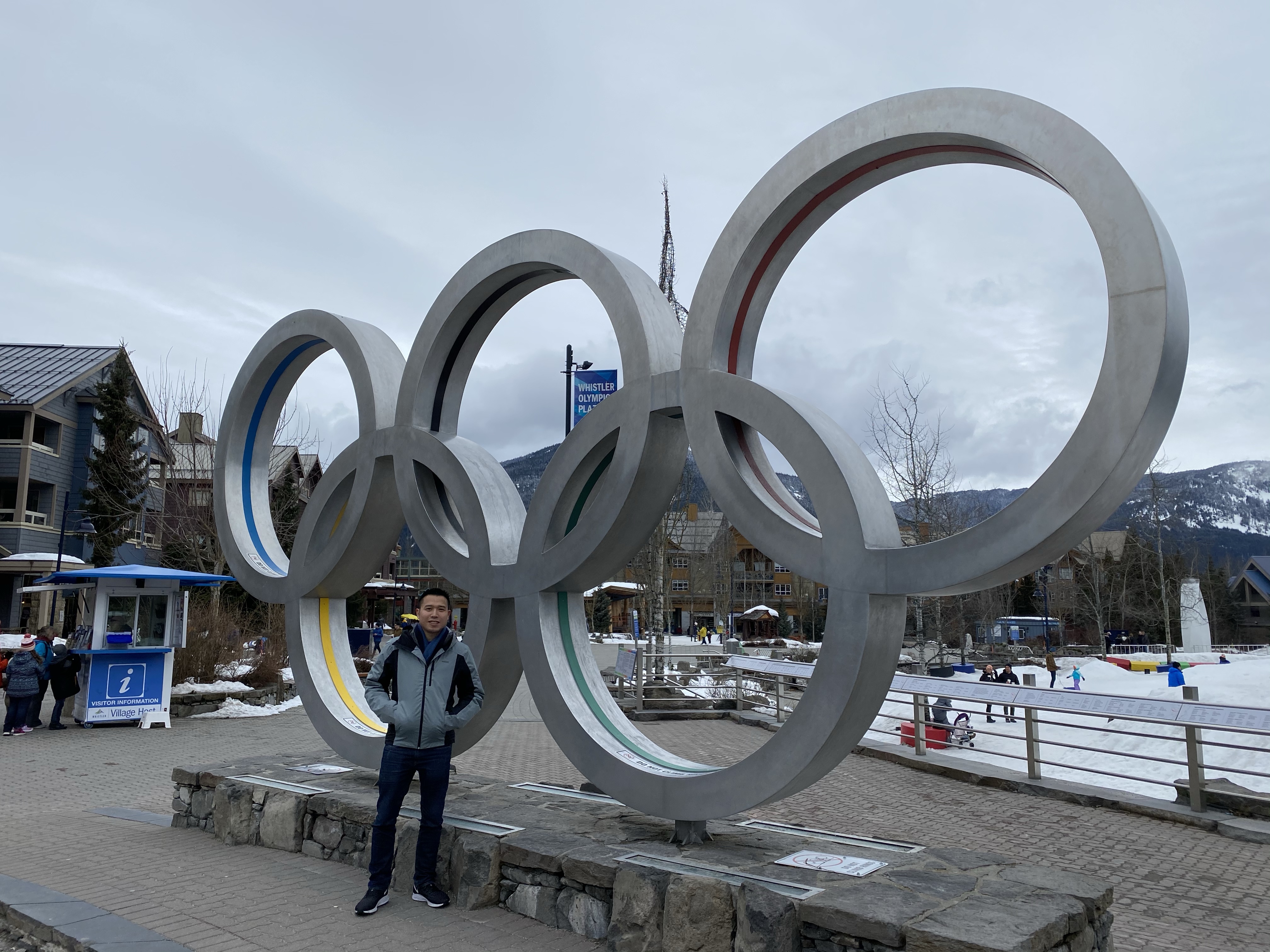
Whistler and Snowboarding

Preparing for Whistler

-To pack, this is what I did (and it worked well).

-pack waterproof gloves, long socks (I packed the really long grey ones that go almost to your knees, plus the long grey ones that go to your calves) and goggles for snowboarding, but rent everything else

-bring a waterproof and wind resistant winter jacket (remember you’re a size x-small), but you also need to bring your inner cloth jacket

-Bring boots (with socks that go above the height of the boots)

-pack ear muffs and scarf

-pack small, non waterproof gloves

-for regular clothes, I brought a light weight hoodie (the grey express one), and a heavier one the black roots hoodie). I also brought a couple of black inner shirts, thermal underwear, one nice shirt and one not so thick outer layer.

-should also pack an umbrella, thermal underwear,

-next time bring a small flask for the mountain 🙂

Getting up to Whistler

-driving up and down with an all wheel drive car rental was fine (but there wasn’t really snow on the roads. But black ice could exist). Although none of the cars rented were verified for winter tires (I think next time just calling the rental place is easiest to see if they have winter tires)

-the other alternative I did not try was epicrides.ca. I bought a ticket, but didn’t end up needing to take the bus

Rentals in Whistler

-you can rent a jacket, pants, helmet, boots and board. Gloves and goggles you can’t (so bring them!). For boots, remember to get the ones with the laces

Getting Around Whistler

-there wasn’t any Uber or Lyft drivers up there (even though there were some in Vancouver). I ended up either getting rides, or calling a taxi: ‭+1 (604) 938-1515‬

-Parking is interesting. Under the village (most convenient) it was $40 for 6 hours. Also the space under there is pretty tight. Above ground, 7 minute walk from the village, it’s only $10

Gondola’s in Whistler

-there’s a difference between the chair lifts and Gondola/. Gondolas are better since you don’t have to have one of your snowboards already strapped

Mountains in Whistler

-Blackmomb’s easiest Green is far easier than Whistler’s (and shorter). I would start off on that mountain for training

Snowboarding

-Fresh powder makes turning and controlling your board easier. It also hurts WAY less when you fall

-doing a “falling leaf” is good practice for controlling your board, but it’s really only using your heals (which means you’ll never get good if you only do that since you’re not using your toes for control). For falling leafs, always have your board popping out away from the mountain, while you have your weight on your heals

-falling leaf is also good for practicing breaking also

-in general for turning, always have your weight TOwARDS the mountain, and the board slightly up away from the mountain

-stance is really important. Always be relaxed (not tensed up with your legs). It’s less tiring that way, and it’s easier to control your board

-having a shot really helped, since it made me less afraid, and more able to go with it (should bring a flask up there!)

-not sure if I’m a goofy or regular. I sorta kept switching with falling leaf. But this I think I primarily stayed as a regular

-goggles were fogging up often when using them. I think I should get ones with more vents, or just stick to sunglasses
Series A, B, C, Convertibles, Safes, etc

Here’s a really good document describing the different series and the various paybacks you have to give to your investors for each round:

https://blog.ycombinator.com/how-to-raise-a-seed-round/

Here is a lighter document describing the purpose of each investment round with respect to what the company should be doing:

http://www.startupfreak.com/what-does-series-a-series-b-series-c-funding-mean-in-startups/

Bikes and Gears

A really good cheat sheet for what gear to be on a bike (depending if you’re on a flat, downhill or uphill road):

https://www.bicycling.com/training/a20004265/how-to-shift/

Basically from that site, you learn that:

  • The front most gears are called the “higher” gears
    • Remember to alway picture this: the front gears at the pedal is the largest gear while the front gear at the back wheel is the smallest gear
  • It is easier to pedal when you are in the lowest gears. Here is why:
    • “To get a good picture of how this works, imagine you’re going up a hill. No matter what gear you’re in, you’ll have to travel the same distance and ultimately use the same amount of net force, but by shifting into a lower gear, you can make it up a lot easier. When you’re in a low gear, the wheel only turns a short distance for each rotation of the pedals. This way, the force that you need to move a few centimeters forward on the road is spread over the entire turn of the pedals, making it very easy to concentrate a lot of force into a short distance.”
      • http://physicsbuzz.physicscentral.com/2009/01/howd-they-do-that-tuesday-physics-of.html
        • The key part to visualizing this is to remember that for gear ratios, the velocity of gears in contact MUST be the same. So if the gear at the pedal is at the smallest gear, and the gear at the back wheel is at the largest (aka lowest gear), it makes sense that when you will be completing a circle at the front wheel, the back largest gear will only have rotated a fraction of a complete rotation
          • https://en.m.wikipedia.org/wiki/Gear_train